
Glutathione: Dosage, Reconstitution, and an Honest Look at the Evidence
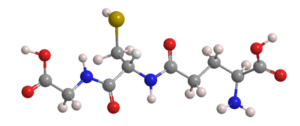
Most people injecting glutathione subcutaneously have no real idea what happens to the molecule once it’s under the skin—and that gap in understanding is exactly what keeps wellness clinics selling it.
Glutathione is one of the most over-promised compounds in the optimization space. There’s a mountain of marketing around it and, underneath that, a surprisingly thin layer of clinical evidence for the subcutaneous route specifically. So the useful question isn’t “should I keep using it or throw it out?” It’s: what does glutathione actually do, where does injecting it run into biological limits, and how do you decide whether it belongs in your protocol at all? This article answers that—grounded in the biochemistry, the available data, and a realistic read of the risks.
Quick Takeaways
- Subcutaneous glutathione bypasses gut metabolism, but it runs into a cellular-uptake problem that most people never hear about.
- There is no standardized, evidence-based subcutaneous dosing protocol in clinical medicine right now.
- Your body tightly regulates its own glutathione synthesis, which limits how far exogenous dosing can actually move the needle.
- N-acetylcysteine (NAC) has stronger clinical evidence for raising intracellular glutathione than direct glutathione injection does.
What Glutathione Actually Does at the Cellular Level
Glutathione (GSH) is your body’s master intracellular antioxidant. It works primarily by directly scavenging reactive oxygen species (ROS) and serving as a critical cofactor for glutathione peroxidase, the enzyme that neutralizes hydrogen peroxide and lipid peroxides inside your cells.
Its anti-inflammatory effects run deep. Through thiol-disulfide exchange reactions, glutathione modulates major signaling cascades—including the NF-κB and MAPK pathways—while reducing cytokine production and oxidative damage at the molecular level. Ultimately, its value comes down to redox biology: the balance between oxidation and reduction that governs cellular aging and metabolic health.
The Absorption Problem Nobody Talks About
Here’s the part the marketing skips. Most cells synthesize glutathione de novo—they build it internally from the amino acid precursors glutamate, cysteine, and glycine. Your cells are not designed to readily import the intact glutathione molecule from the extracellular space.
Outside the cell, glutathione is frequently broken down by gamma-glutamyl transferase back into its component amino acids, which are then taken up and reassembled inside the cell. The gamma-glutamyl cycle does let certain tissues—particularly the liver, kidney, and lung epithelium—use extracellular glutathione more directly via membrane transporters, which is one mechanistic reason IV and parenteral administration have shown tissue-level effects in animal studies.
But the honest conclusion is this: injecting glutathione does not guarantee meaningful intracellular increases across tissues. Anyone who tells you otherwise is selling certainty the biology doesn’t support.
SubQ vs. IV: The Pharmacokinetic Difference
Subcutaneous delivery has one real advantage over oral dosing—it bypasses first-pass hepatic metabolism, so the liver doesn’t immediately degrade what you inject before it reaches systemic circulation. The tradeoff is in absorption kinetics: SubQ injections absorb more slowly than IV, producing lower but more prolonged plasma levels. In theory, that could offer a more sustained window of availability to tissues like the liver and kidney that can actually utilize circulating glutathione.
The important caveat is where the data lives. The majority of human clinical evidence comes from IV glutathione, with modest and inconsistent signals—for example, small Parkinson’s disease trials showing some symptomatic benefit that hasn’t been replicated at scale. There are no high-quality randomized controlled trials evaluating SubQ glutathione dosing, frequency, or comparative efficacy against IV or oral routes. That’s a real literature gap, and it’s worth naming plainly rather than papering over.
What People Actually Use SubQ Glutathione For
The primary off-label use is skin lightening, on the theory that glutathione inhibits melanin synthesis by interfering with tyrosinase activity. Some small randomized trials have reported reductions in melanin index scores, but the methodological quality is low, the results are inconsistent, and regulatory agencies—including the FDA—have not approved injectable glutathione for skin whitening or general wellness, citing insufficient evidence. Chronic high-dose cosmetic use also raises legitimate concerns about disrupting normal melanocyte function, with unknown long-term consequences.
In the biohacking and recovery world, the rationale shifts to post-training recovery and general antioxidant support. These uses have plausible mechanistic logic behind them, but none carry the robust clinical validation you’d want before calling something a “proven” protocol. If your interest is injectable support for skin and cellular repair with a stronger evidence base, GHK-Cu is a more defensible place to spend your money.
Dosage Guidance: What’s Being Used in Practice
Because there’s no standardized, evidence-based SubQ protocol, what follows reflects practitioner experience and self-experimentation—a starting framework, not a clinical guideline.
A commonly referenced practitioner protocol runs 200–400 mg (up to 600 mg) SubQ or IM, 2–3 times per week in the morning, on an 8-weeks-on / 2–4-weeks-off cycle. That’s broadly consistent with what’s seen across the practitioner community.
Commonly observed SubQ dosing ranges:
- 100–600 mg per injection, 1–3 times per week
- Higher doses (400–600 mg) tend to be used by those targeting systemic antioxidant effects
- Lower doses (100–200 mg) are used in maintenance or adjunct protocols
- Most practitioners use sterile, pharmacy-compounded glutathione in isotonic saline
Injection basics:
- Use a 27g or 29g insulin-style needle at a 45-degree angle into abdominal subcutaneous fat
- Rotate injection sites consistently to avoid tissue irritation
- Inject slowly (10–15 seconds) to minimize local discomfort
And keep one biological reality in mind throughout: glutathione synthesis is tightly regulated by feedback inhibition of gamma-glutamylcysteine synthetase. Your endogenous system actively resists sustained elevation from outside dosing—which is a large part of why “more injected” doesn’t translate cleanly into “more inside the cell.”
Safety, Risks, and Contraindications
Known and potential adverse effects of SubQ glutathione include:
- Injection site reactions—redness, swelling, induration
- Skin rashes
- Rare but serious: Stevens-Johnson syndrome has been reported in case studies linked to injectable glutathione
- Respiratory caution: IV glutathione has triggered bronchospasm in asthma patients; the relevance to SubQ injection is currently unclear, but it warrants caution in susceptible individuals
There’s also a theoretical concern, supported by limited animal data, that repeated high-dose administration may downregulate your own synthesis pathways over time—effectively making you more dependent on exogenous glutathione.
Do not use injectable glutathione if you have a history of severe allergic reactions, asthma, or kidney dysfunction without direct supervision from a knowledgeable clinician.
The Oral Alternative: Why NAC Wins on Evidence
If your primary goal is raising intracellular glutathione, N-acetylcysteine (NAC) has stronger clinical evidence and far more predictable pharmacokinetics than SubQ glutathione injection.
NAC is a direct precursor to cysteine—the rate-limiting amino acid in glutathione synthesis—and it reliably raises intracellular GSH across multiple tissues, backed by decades of human trial data. Crucially, it works with your biology rather than trying to flood the extracellular space with a molecule your cells may not absorb. Going straight to injectable glutathione while ignoring NAC optimization is like skipping the foundation and wondering why the house won’t stand.
So does SubQ glutathione have any defensible role? Potentially—for liver and kidney support under oxidative-stress conditions, where those tissues can use extracellular GSH more directly. But that’s a narrow, situational case, not the broad “master antioxidant infusion” it’s often marketed as. For mitochondrial antioxidant support at the peptide level alongside NAC, MOTS-c and SS-31 target cellular energy and oxidative stress through entirely different mechanisms and are worth understanding.
How to Reconstitute Glutathione Correctly
Here’s the uncomfortable part: a lot of people are injecting glutathione that’s already lost most of its value—not because the compound is bad, but because they degraded it during reconstitution. It’s an easy mistake, even experienced users make it, and mainstream providers give essentially zero guidance on doing it right. This section fixes that.
Quick Takeaways
- Glutathione oxidizes rapidly in solution; improperly reconstituted reduced glutathione (GSH) can lose its antioxidant function within hours.
- Use sterile water, metal-free supplies, and light protection—every step in your environment matters.
- Reconstitute immediately before use. Do not pre-mix and store.
- If short-term storage is unavoidable, refrigerate at 2–8°C, because room temperature accelerates GSH loss.
Why Reconstitution Matters More Than You Think
Glutathione is one of the less forgiving compounds in this category—handle it poorly and it turns into something biologically useless. Reduced glutathione is a tripeptide of glutamate, cysteine, and glycine, normally synthesized intracellularly by glutamate-cysteine ligase and glutathione synthetase. When you introduce exogenous GSH through a reconstituted injectable, you bypass those synthetic pathways entirely—which means the burden of preserving potency falls 100% on your handling technique. Reconstitute it wrong and you’re not getting the compound you think you are.
The Biology You Need First
Glutathione’s therapeutic value lives and dies in its reduced form. GSH exerts its effects mainly through three pathways: redox regulation of protein thiols, modulation of NF-κB signaling, and detoxification reactions catalyzed by glutathione S-transferases. Every one of those requires the molecule to stay reduced.
The moment glutathione oxidizes to glutathione disulfide (GSSG), the picture changes completely. Oxidized GSSG has different biological behavior and cannot replicate the antioxidant effects of properly maintained GSH.
And GSH is highly susceptible to auto-oxidation in aqueous solution—especially at neutral-to-alkaline pH and at room temperature. The moment you dissolve lyophilized glutathione, you start a timer working against you. Trace metal ions like iron and copper catalyze oxidation through redox cycling, light accelerates degradation, and ambient oxygen does the rest—converting GSH to GSSG faster than most people realize. This is precisely why hospital pharmacy protocols require glutathione to be prepared immediately before administration.
What You Need Before You Start
Required materials:
- Lyophilized (powder) glutathione vial
- Sterile water for injection (bacteriostatic water is appropriate for multi-use vials)
- Appropriately sized sterile syringes and needles
- Alcohol swabs
- An amber vial or light-protective sleeve, if not already included
- A refrigerator set to 2–8°C
What to avoid:
- Any reconstitution solution containing trace metals—iron and copper catalyze oxidation and will destroy your GSH
- Tap water or non-sterile water of any kind
- Prolonged exposure to open air or direct light during mixing
- Pre-drawn syringes stored at room temperature
Step-by-Step Instructions
1. Prepare your environment. Work quickly and cleanly, minimize the time your solution is exposed to open air, wipe surfaces and hands with alcohol, and keep ambient light low or work away from direct sunlight.
2. Clean the vial tops. Swab the tops of both the glutathione vial and the sterile water vial firmly with a fresh alcohol swab, then let both air-dry for 10–15 seconds.
3. Draw your reconstitution fluid. Use a fresh sterile syringe to draw the volume of sterile water specified by your compounding pharmacy or prescribing clinician. Don’t use saline with additives that could introduce metal contamination.
4. Inject slowly into the glutathione vial. Direct the water slowly down the inner side wall of the vial—never blast it directly into the powder. Aggressive injection adds agitation and increases oxygen contact.
5. Gently swirl—do not shake. Roll and swirl until the powder fully dissolves. Shaking creates foam, increases oxidative surface exposure, and degrades the molecule faster.
6. Inspect before use. The solution should be clear to slightly pale yellow. Discoloration is a visible signal of oxidation—discard immediately if it’s cloudy, contains particulates, or has turned brown or dark. Never use degraded solution.
7. Administer immediately. This is non-negotiable: reconstituted glutathione should be used immediately, or as close to it as possible. Every minute at room temperature accelerates the GSH-to-GSSG conversion.
Storing Reconstituted Glutathione (If You Absolutely Must)
Reconstituted glutathione declines rapidly at room temperature, but refrigeration at 2–8°C markedly slows it. If you must store it briefly:
- Keep the vial refrigerated at the temperatures above
- Protect it from all light in an amber vial, and only for as long as your compounding pharmacy specifies (typically 24 hours maximum)
- Do not freeze it—freeze-thaw cycles destroy potency and introduce aggregation risk
Route-Specific Considerations
Intravenous. IV glutathione transiently raises plasma levels, but extracellular GSH is rapidly degraded by gamma-glutamyltransferase (GGT), which limits reliable elevation of intracellular GSH. Fresh reconstitution matters especially here.
Nebulized / inhaled. Nebulized glutathione is even more oxidation-sensitive than injectable forms, and oxidized nebulized GSH can actively increase airway irritation. Immediate reconstitution before inhalation is mandatory.
Liposomal formulations. Liposomal glutathione shows meaningfully better post-reconstitution stability and bioavailability than simple aqueous solutions. A properly formulated liposomal product reduces some—not all—of the oxidation urgency, and proper handling is still required.
Safety, Risks, and Contraindications (Handling)
Contamination. Every reconstitution step is a contamination opportunity, so use strict aseptic technique. Injection-site redness, swelling, or nodule formation often signals contamination or improper technique.
Dilution errors. Incorrect dilution ratios can produce solutions with problematic osmolarity or pH. Follow the reconstitution instructions from your compounding pharmacy or clinician, and don’t choose your own volumes unless you genuinely know how to calculate the dose.
The GSSG problem. Improperly stored or delayed-use solution results in elevated GSSG:GSH ratios. High GSSG can actually promote pro-oxidative signaling—meaning you could be creating the very oxidative stress you’re trying to fight. It’s a common and counterproductive mistake worth avoiding entirely.
Myths vs. Reality
| Myth | Reality |
|---|---|
| “Reconstituted GSH stays good for days in the fridge” | Reduced GSH degrades markedly within hours, even refrigerated |
| “All glutathione forms work equally well post-mix” | Liposomal and buffered formulations have meaningfully better stability |
| “IV glutathione reliably raises intracellular levels” | GGT degrades extracellular GSH rapidly; results are transient and variable |
| “Shaking the vial is fine” | Shaking increases oxidative surface exposure and accelerates degradation |
The Bottom Line
SubQ glutathione has a compelling mechanism, widespread off-label use, and a plausible pharmacokinetic edge over oral glutathione. But the clinical evidence for the subcutaneous route is genuinely thin, the risks are real, and the dosing is far from standardized. If your goal is raising intracellular glutathione, NAC is the better-evidenced first move, and glutathione sits at the center of a broader antioxidant network that it depends on—not a standalone fix.
The difference between effective glutathione therapy and expensive oxidized water comes down to three things: your technique, your supplies, and your timing. Get the biology right, be honest about what the evidence does and doesn’t support, and make the call that fits your goals.